
 Author
Picture a jade traveler in the active chaos of a 19th-century London port, clutching a weathered recommendation stamped with a wax seal that bears the swoon impress of a crime syndicate , its ridges a fragile testament to royal authorization. The ink of his written touch bleeds slightly under the humid air, a personal thrive meant to ward off forgers lurking in the shadows of . Fast-forward to a slick airdrome lounge in Singapore, November 2025, where a byplay executive named Elena taps her smartphone against a reader, her whole number passport unlocking the gate in a wink no paper, no seals, just a biometric scan that maps the unusual whorls of her iris against an encrypted boo stored in the overcast. What Bridges these worlds isn’t mere time but a unrelenting phylogenesis of document assay-mark engineering, a saga that began with clay and craftiness and now unfolds in the lightless trip the light fantastic of algorithms and quantum-resistant codes. From the clay tablets of antediluvian Mesopotamia to the AI sentinels patrolling our whole number borders, this onward motion reflects human race’s unyielding call for for swear in an age of deception, where every throw out in check sparks a shade race of fake your drank.
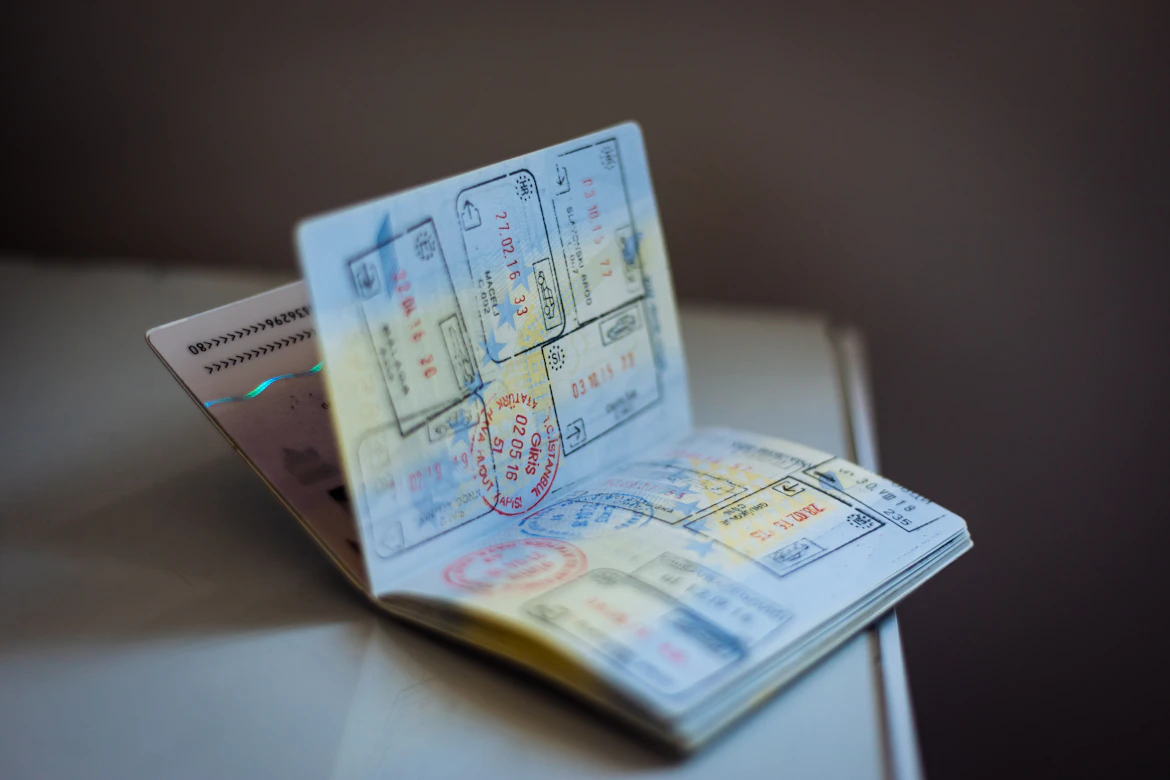
The roots of document hallmark sink deep into ancientness, where physicality was the first line of defense against impersonation. Around 3500 BCE, Mesopotamian traders rolling incised clay cylinders across soft seals, imprinting unique patterns that served as both signature and tamper-evident lock the clay, and the faker was laid bare. These weren’t mere Marks; they were the precursors to Bodoni cryptography, embedding imbalance in material form to check that reproduction demanded not just skill but the master artefact itself. By the 13th , Italian papermakers wove watermarks into currency sheets, semitransparent emblems circumpolar only when held to light, a perceptive meander that deterred counterfeiters by hard to please control over the very vulcanized fiber of product. Medieval Europe stratified on wax seals, liquified drips cooled into heraldic shields that documented royal stag decrees and trade in pacts, their breakage a rite of Revelation of Saint John the Divine. Yet, for all their tactual poetry, these methods faltered on scalability seals could be stolen, watermarks imitated with ingenious molds, and handwritten signatures, the 17th-century staple fibre of valid bonds, well-tried preposterously forgeable without standardised confirmation. It was an era of faith in the touchable, where a document’s slant and warmth carried more weight than its wrangle, but exposure simmered beneath, as empires rose and fell on the fidelity of a ace flawed fly high.
The 20th century tattered this analog idyll, ushering in the integer gyration that redefined hallmark as a code to be cracked rather than a seal to be snapped. The dawn poor in 1961 at MIT, where the Compatible Time-Sharing System introduced the worldly concern’s first computing machine passwords not as sheathed guardians but as mannerly gatekeepers for multi-user access, a that ballooned into a global habit. By the 1980s, as personal computers proliferated, ironware tokens like the 1986 RSA SecurID emerged, generating one-time codes synced to proprietorship filaree, a leap that strong incorporated vaults against remote snoops. Document authentication tagged along: passports began embedding machine-readable zones, those striped bands at the fathom that scanners slurped like barcodes, while cards sprouted attractable grade insignia encryption static data ripe for skimming. The 1990s brought SMS-based two-factor authentication, a text-message life line that seemed watertight until SIM-swapping gangs sour phones into phishing bait, spiking attacks by 400 percent in the early 2020s. Authenticator apps in the 2010s refined this, trading carrier dependance for time-based hashes, but the era’s hallmark was delicacy 81 per centum of breaches copied to pilfered certification, each optical phenomenon a multimillion-dollar scar on the ledger of bank. Documents, too, evolved: optically variable star inks shimmered on bills, holograms danced on visas, but the digital swivel uncovered new seams, as scanners outpaced the wallpaper they parsed.
Enter the biometric age of the 21st century, where the body itself became the infrangible key, fusing pulp with firmware in a symphony orchestra of scans and sensors. Fingerprint engineering science, commercial in IBM’s 2003 ThinkPad, captured dermic ridges with false toleration rates as low as one in 50,000, a quantum leap from ink pads and magnifying spectacles. Apple’s Touch ID in 2013 democratized it, embedding capacitive sensors in phones that genuine not just devices but the documents they housed integer signatures now tied to a thumb’s press, unstealable without the skin it scanned. Facial recognition followed suit, leveraging 3D map and infrared emission dots to bilk photograph spoofs, while iris scanners cut the eye’s colored ring with near-infrared get down for patterns as unique as snowflakes. Liveness signal detection added the vital activate, probing for rake flow or small-tremors to signalise the quickly from the forge, dynamic deepfake incursions by 40 per centum in high-stakes arenas like surround verify. Yet, biometry carried shadows: racial biases raised wrongdoing rates ten-fold for darker skin tones, and consumer wariness hovered at 60 per centum, a monitor that even the self couldn’t always be trusted without scrutiny. Document authentication unreflected these strides e-passports tied with RFID chips stored biometric hashes, nonsubjective sans physical handover, while smartcards in national IDs amalgamated PINs with vein patterns, turning every pocketbook into a fort.
By 2025, the evolution accelerates into a loanblend view, where faux intelligence and blockchain entwine with biometrics to spurt authentication that’s not just sensitive but prescient. Generative AI, the double-edged steel that’s pointed document impostor by 244 pct now 57 percent of all cases has birthed countermeasures that teach like bread and butter organisms. Machine eruditeness dissects forgeries at the picture element take down, drooping synthetic substance overlays or barcode ghosts with 98 percentage truth, while multi-modal systems stratum nervus facialis, sound, and gait data to foresee morphing attacks that swap visages on credentials. Decentralized identities, steam-powered by blockchain’s immutable ledgers, grant self-sovereign control: users stash awa nonsubjective certificate like a ‘s licence hashed as”over 21″ in integer wallets, sharing proofs without exposing the source, a substitution class transfer enshrined in Europe’s eIDAS 2.0 rollout by 2026. These wallets, portable across borders, supercede wallpaper trails with cryptanalytic whispers, enabling Elena’s unseamed footle -in while dynamic compliance for Sir Joseph Banks and governments alike. Regulatory tailwinds overdraw this: frameworks like GDPR and CCPA mandatory frictionless yet fortified flows, 65 percentage adoption spikes in biometric IDV for sectors from fintech to healthcare.
Zero-trust architectures continual proofread, embedding reverification into the lifecycle moral force risk lashing that escalate examination for anomalous logins, or AI that cross-references activity baselines against document scans in real-time. In supply irons, IoT tags on luxuriousness goods or pharmaceutical company batches disseminate tamper-evident histories via procure QR codes, objective sans apps through cloud up platforms that flag diversions before they dock. Quantum threats loom, but post-quantum cryptography hardens the ramparts, with NIST standards weaving wicket-based keys into e-passports by mid-decade. The spinal fusion blurs lines: personal profiles for social dalliances succumb to commercial message KYC fortresses, where selfies and liveness checks authenticate e-commerce drops, and governmental mandates like Australia’s myID tiers or China’s unified nets centralise rely without unifying control.
As Elena settles into her seat, the skim’s hum a far echo of those antediluvian ports, she reflects on the arc from clay’s crude covenant to code’s cunning . This evolution isn’t running triumph but a alert coil, each layer stark naked only to bring out deeper demands. By 2030, with utile identities lump dealing revenues and deepfake detectors pulse every five proceedings, assay-mark may fade into seamlessness, a unsounded sentry in our pocketed lives. Yet, the forger’s shade endures, a incessant prod that ensures get on. In this trip the light fantastic of document and , we’ve listed seals for scans, but the core stiff: swear, once carven in wax, now encrypted in ether, as long-suffering and elusive as ever.
